Finding the perfect engagement ring is one of the most emotionally significant and expensive jewellery purchases many people will ever make. But between the 4Cs, diamond shapes, lab-grown versus natural stones, settings and budgets, knowing where to start can feel overwhelming.
To better understand what goes into choosing the right ring, I stepped into a one-on-one consultation to learn what modern couples should know before beginning their engagement-ring journey. I spoke with TMC Fine Jewellers‘ co-founder, Makayla Donovan, to discover what modern couples should consider when choosing an engagement ring, from finding the right style to navigating the process with confidence.
TMC Fine Jewellers is an ethical bridal jewellery brand based in Brisbane, Australia. They have stores across the eastern states and recently held a pop-up in Perth to showcase their new collection. Whether you’re searching for the perfect engagement ring, marking a milestone, or simply treating yourself, TMC offers options for everyone, with the professional knowledge to help you find your dream ring.
Known for its attainable luxury positioning, they have built their reputation on the strength of their showrooms in Brisbane, Melbourne and Sydney. They provide unhurried, expert-led, one-on-one consultation that builds trust and helps customers move from research to a confident decision. They are at the forefront of engagement-ring shopping, becoming less about following a prescribed formula and more about individuality, education and personal choice.
How to Choose the Right Engagement Ring
Starting the journey for the perfect ring can seem like the most daunting part of it all. With endless cuts and settings, colour, carat, clarity, cost, and more, the options can feel overwhelming. So let’s start from the basics. “I always recommend starting with them as a person, not the ring. Their personal style, lifestyle, profession and any types of jewellery they’ve been drawn to over the years,” says Makayla. Consider what your day-to-day looks like, what you do for work, whether you’re active or spend a lot of time using your hands, and how often you wear jewellery. While aesthetics are important, the ring needs to work for your everyday life too; after all, it’s a piece you’ll likely be wearing every day for years to come.
Here is where the consultation comes in. In the showroom, you get taken through all of the metal types to find your preferred one; you can try on diamond shapes and discover whether you might lean toward something more classic or intricate in design. “We deliberately don’t want our consultations to feel transactional. Choosing an engagement ring is a significant moment, and we want people to have the space to enjoy it,” says Makayla. “You absolutely don’t need to know exactly what you’re looking for before speaking with a jeweller. A good jeweller and consultation should help you work that out rather than expect you to arrive with all the answers.”
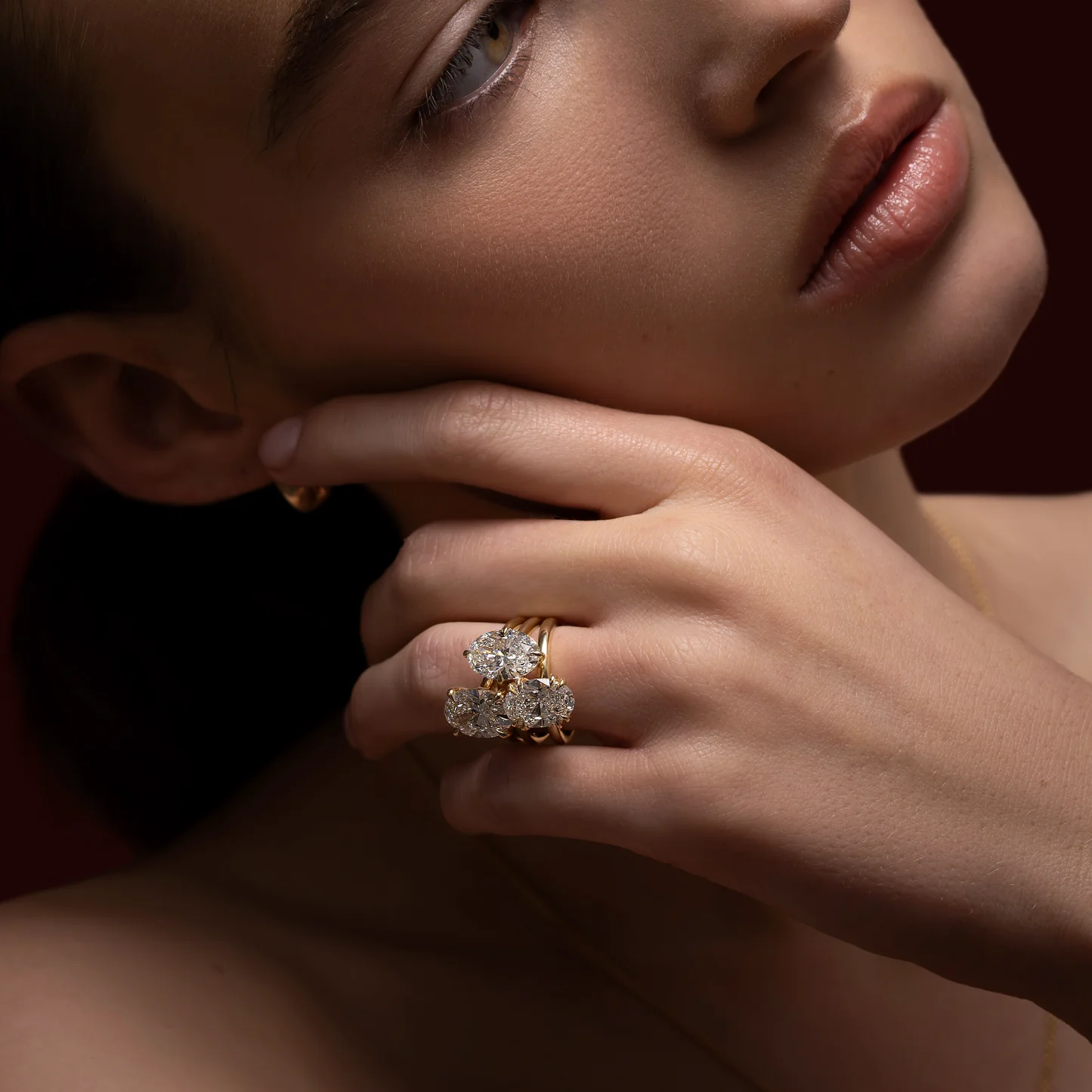
Makayla details that often a client will begin with a very broad idea of what they like, perhaps they know they like yellow gold, or they’ve saved a few oval rings on Instagram, and that’s more than enough to start with. “Our consultants will talk through their lifestyle, preferences and budget, then guide them through different diamond shapes, sizes, settings and design details.”
Sometimes, knowing what you don’t like can be just as valuable as knowing what you do. There’s no expectation to arrive with all the terminology or have your perfect ring already envisioned. Our role is to offer our expertise, ask the right questions and help translate each person’s individual style into a piece they’ll genuinely love wearing.
The 4Cs: What Actually Matters And Where You Can Compromise
Choosing the diamond that you want in your ring is arguably one of the most important parts of this process. So when considering your options, you look at something known as the 4Cs: cut, colour, clarity and carat.
The Cut and Colour
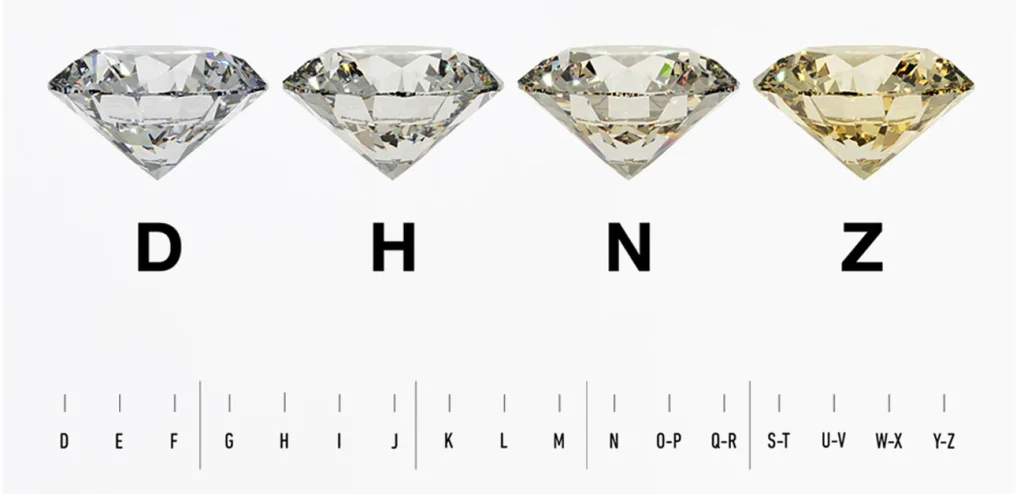
The cut is how well a diamond’s facets interact with light, and it is widely considered the most important factor of the 4Cs because it dictates the stone’s brilliance and sparkle. The grades range from ‘Excellent’ to ‘Poor’. Colour is the measure of the absence of colour in the diamond. The standard scale goes from D (completely colourless and rarest) to Z (light yellow or brown tinge).
Clarity
Clarity evaluates tiny internal flaws (inclusions) and surface defects (blemishes). The scale spans from Flawless (FL) down to Included (I3). Most buyers look for ‘eye-clean’ stones in the VS (Very Slightly Included) or SI (Slightly Included) ranges, which means they may have imperfections, but ones only visible under a microscope. TMC’s diamonds are all ‘eye-clean’ grade diamonds.
Carat
The final factor is carat, which measures the physical weight of a diamond. One carat equals 200 milligrams (0.2 grams), not its visual size. It is often one of the most debated factors, with couples having different ideas about how large they want their diamond to be.
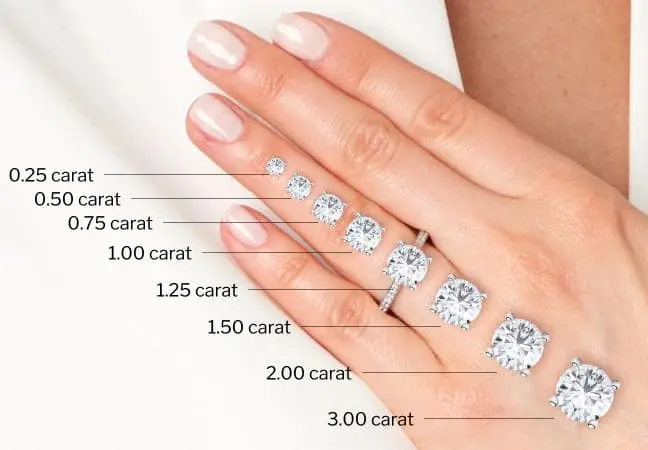
“If you were to focus on only one 4C, it should be Cut. Cut and overall visual performance are incredibly important because they influence how bright, lively and beautiful a diamond appears.
With colour and clarity, there’s often more flexibility. A diamond can be completely eye-clean without the highest clarity grade, and subtle differences between colour grades can be hard to distinguish with the naked eye once the diamond is set. Especially if you’re choosing a lab-grown diamond, where most range between the D-F colour range. The best diamond isn’t necessarily the one with the highest grading; it’s the one that gives you the best combination of beauty, quality and value.”
Natural vs Lab-Grown Diamonds: What’s the Difference?
One of the biggest friction points in couples deciding on what diamond they want in their ring is the misconception about natural vs. lab-grown. Many think that lab-grown diamonds are somehow an imitation that looks the part but doesn’t live up to the standards of natural diamonds, similar to cubic zirconia or another diamond alternative; however, they aren’t.
“The most important factor to understand is that a lab-grown diamond is chemically, physically and optically the same as a mined diamond. The only difference is in its origin,” affirms Makayla. “They are diamonds grown using technology that recreates the conditions under which diamonds form naturally,” so in every way that it counts, they do not differ.
So for many clients, choosing a lab-grown diamond over natural allows you to place priorities on what’s important to you in other aspects of the ring’s design. Whether it be designing the ring with your dream carat size or bespoke detailing, or investing the money you otherwise would have spent on a mined diamond towards your upcoming wedding, dream honeymoon or personal investments.
Choosing Your Design
TMC’s new Solitaire Silhouettes collection reflects the evolving preferences they’re seeing in their showrooms, with growing interest in wider bands, more substantial proportions and silhouettes that feel distinctly modern. The collection retains the simplicity and longevity of the classic solitaire, while giving the timeless style a more contemporary presence.
So when looking for your perfect shape, consider balancing what feels modern and what will stand the test of time, with a focus on a timeless silhouette or shape; then you can introduce subtle contemporary details or personal factors that provide that edge.
“Our collections will always be centred on pieces that feel considered, distinctive and deeply personal, while retaining the refinement and wearability that sit at the heart of our aesthetic,” says Malayla, so you know that any design you choose can feel contemporary and personal without compromising its timeless appeal.
Once you’ve settled on a diamond shape, the setting and metal are where the personality of the ring really starts to take shape. From the classic claw setting to a more secure bezel, the setting not only changes the overall look of the ring, but can also influence how practical it is for everyday wear.
“Lifestyle is a big consideration, especially because engagement and wedding rings are pieces that you wear daily, for a lifetime,” says Makayla. “Someone who works with their hands might be better suited to a low-setting or bezel setting. However, that said, practicality doesn’t always have to override what you’re wanting out of your dream rings – with a bespoke jeweller like TMC, you can work to achieve both.”
The same goes for the metal. Yellow gold, white gold and platinum each create a different finish, with the choice ultimately coming down to personal preference. Rather than choosing a metal simply because it is currently trending, consider what you already wear, what complements your colouring and what will feel cohesive with your everyday style.
TMC is the forefront of showing why quality matters. Makayla voiced to me that one of the biggest things she encourages people to consider is how and where the ring is actually made.
“Not all rings are crafted to the same standards, and that isn’t always something you can see at first glance. At TMC, we meticulously craft every ring here in our Australian workshops using Australian-sourced precious metals. In some cases within the industry, ring mounts can be manufactured offshore, and the diamonds are set locally. As a client, you may be none the wiser until issues arise with the ring further down the track.”
TMC understands how to balance beautiful design with structural integrity and longevity. An engagement ring is designed to be worn for decades, so the smallest details – band thickness, setting height, prong structure and how the stones are secured really matter.
How Much Should You Spend? Debunking the Old “Three Months’ Salary” Rule
I think we’ve all heard the old saying that the partner who is buying the ring should contribute three months’ salary for the ring. Today, there are no hard and fast rules; however, modern couples are now approaching the budget together. While the old rule was a 1930s marketing gimmick designed to boost sales, today’s couples prioritise starting marriage debt-free and allocating money toward other milestones. This is where lab-grown diamonds have grown in popularity, and why the consultation process of designing each factor of the ring is so important, so you are aware of the price transparency every step of the way.
“Lab-grown diamonds inherently afford couples their dream ring at a much more advantageous cost, and with most couples booking in for consultations together, they go through the budgeting, diamond selection and design process together for the utmost alignment and transparency of what they hope to achieve together. It’s a really genuine and beautiful milestone shared, with the proposal remaining the element of surprise.”
Today, the factors influencing the budget lie solely in preference when taking into account the entire budget for the wedding as well. The range sits between $ 2,500 to $ 5,000 on average; however, it differs from couple to couple.
Why Trying Rings On Matters
With so much engagement ring research now happening online, going in-store can be overlooked by so many. “Online research is fantastic for discovering what you’re drawn to, but there are certain things that are very difficult to understand through a screen,” says Makayla. Seeing what different diamond shapes, colours and designs look like on your particular hand is crucial to ensuring you decide on the right option for you.
“Diamond shapes and sizes can look completely different on different hands. Even small changes in band width, proportions or setting height can change the overall feel of a ring. A one-on-one consultation also allows you to slow the process down. Rather than comparing hundreds of rings online, you’re able to talk through what you like, what you don’t, your lifestyle and your budget with someone who can progressively narrow the options. It turns what can feel like an overwhelming amount of choice into a much more personal experience.”
Personally, I had already picked out a few favourites before walking into the consultation, based purely on online research. But seeing the rings in person quickly changed my mind. Designs I had initially overlooked caught my attention once they were on my hand, while one of my online favourites didn’t have quite the same impact in person. By the end of the consultation, I had a completely new favourite design for my dream ring entirely.
And that is perhaps the value of the in-person experience. TMC’s approach is centred around an unhurried, expert-led consultation, creating a space where you can ask questions, try on different designs and take your time working out what actually feels right. Rather than feeling like you need to arrive knowing exactly what you want, the experience is about discovering it with the guidance of someone who can help translate your preferences into a ring that feels personal to you. Sometimes, you don’t know what your perfect ring looks like until it’s on your hand.
Rather than simply following whatever is trending, designing a ring that feels personal is something that TMC focuses on. To ensure this, one of the biggest factors in the consultation is to create a ring that feels inherently like the person who is going to wear it.
“A perfect engagement ring for someone isn’t necessarily the largest or most elaborate. They’re the ones where the proportions feel right on the hand, the design reflects someone’s personal style, and there is a story or intention behind the choices that were made.”
Ultimately, an engagement ring becomes part of someone’s everyday life. It is a reflection of their personal style and, in many ways, who they are. That’s what makes a ring truly special: when it no longer feels like simply a piece of jewellery that was chosen, but something that feels as though it was always meant to be theirs.
The engagement ring is no longer a one-size-fits-all symbol of commitment; it is an opportunity to express individuality, personal style and the relationship it represents.
Read more of our Fashion & Style articles here.