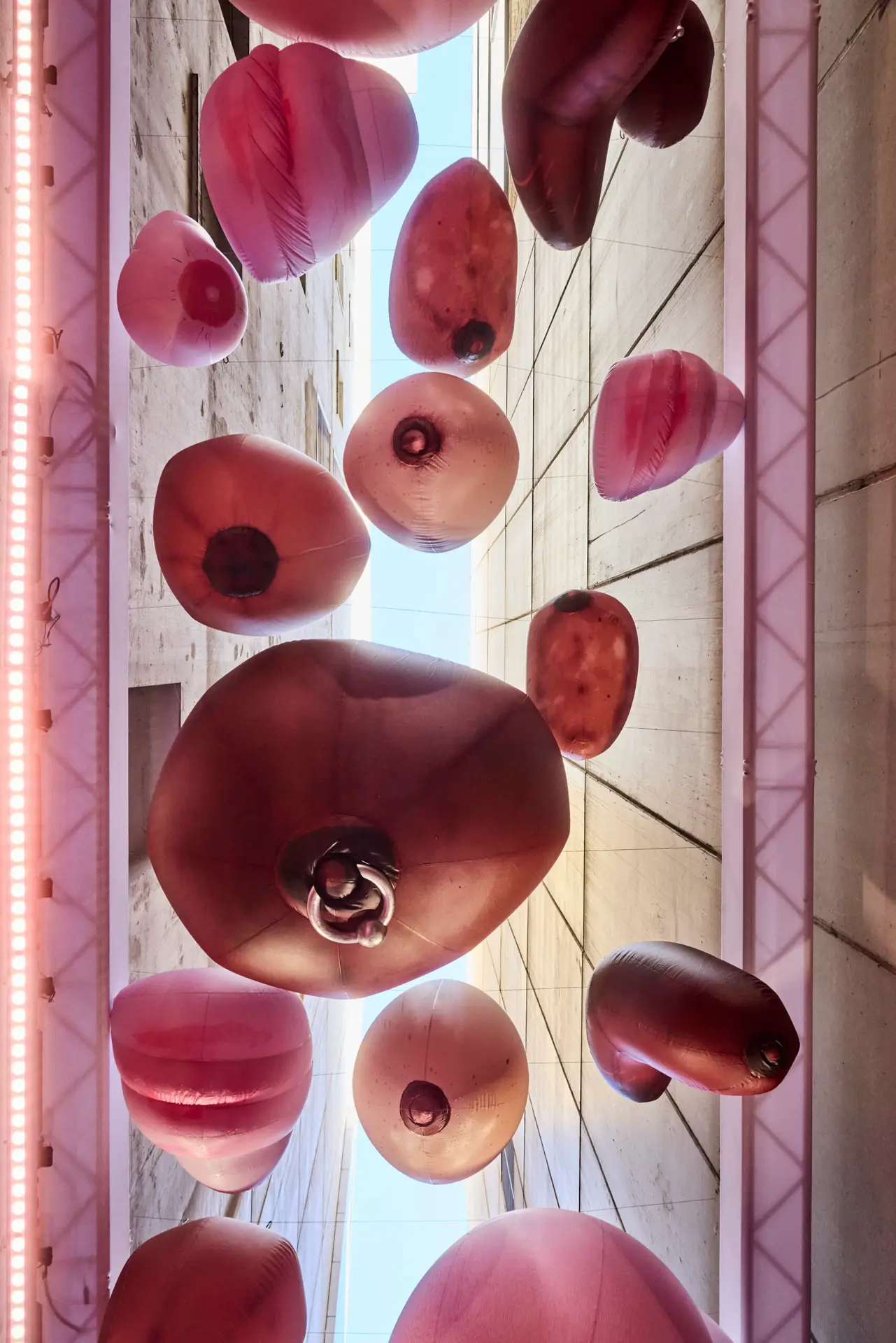
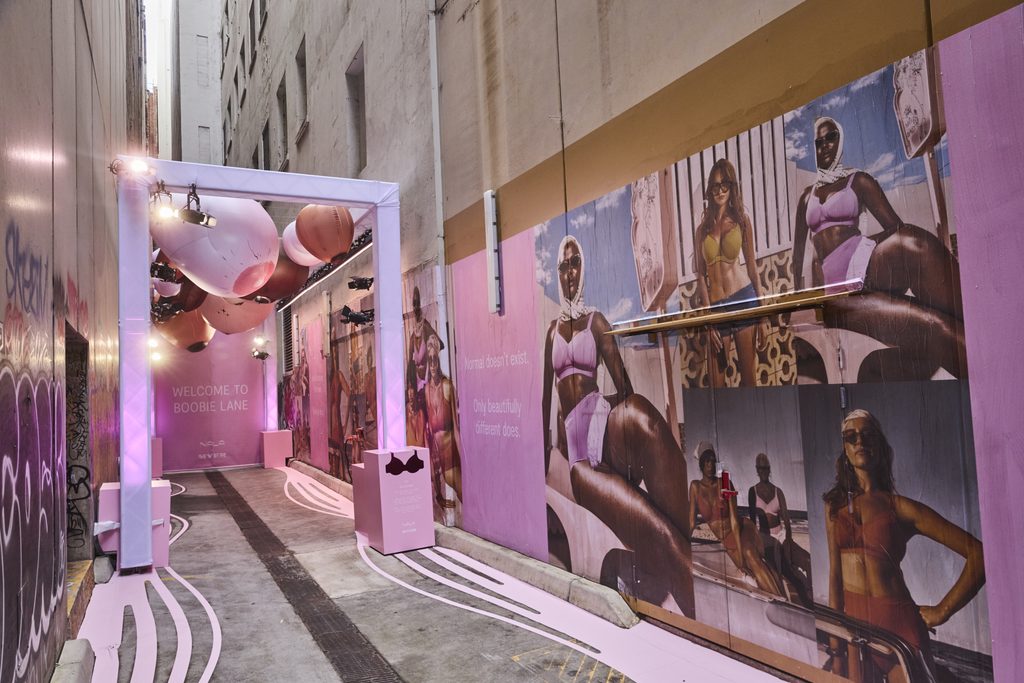
Supposedly, Melbourne has completely lost the plot. If you haven’t seen it yet, Australian intimates brand Nala have generated a fair bit of emotional outrage on social media due to their latest bold move: Boobie Lane. Going all out for their new launch in Australian retailer Myer and displaying 24 giant inflatable breast sculptures in a laneway in Melbourne CBD, Nala have got half of Melbourne loving them and half of Melbourne hating them – and it’s forced a much-needed discussion on women’s body image, representation, and societal expectations.
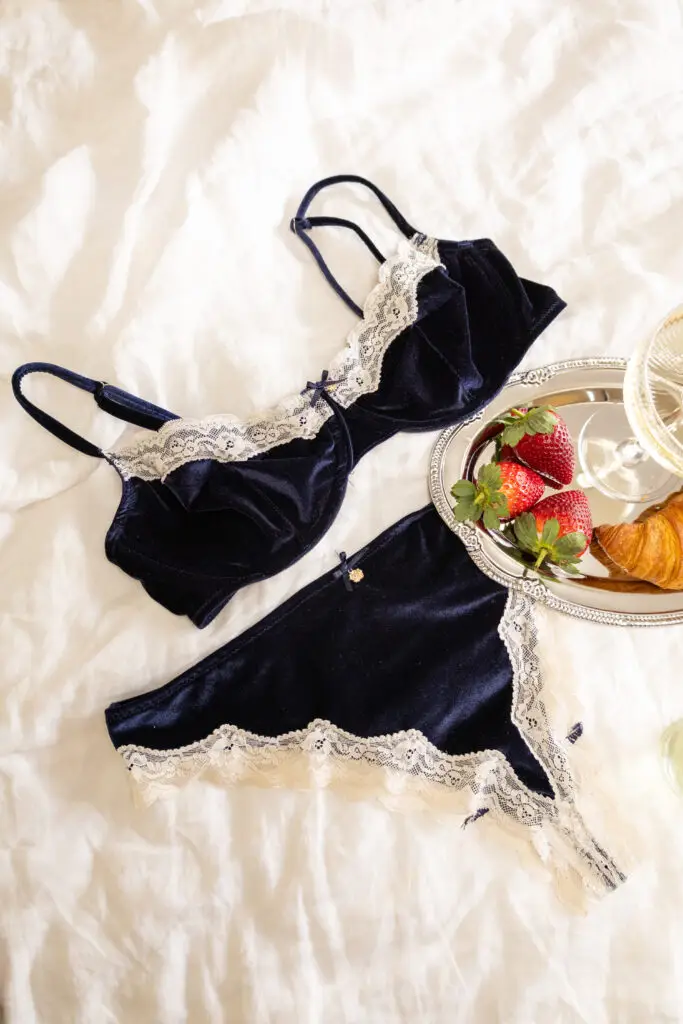
Nala is an Australian-born intimates brand, catering for all different sizes and shapes, with a focus on building confidence and comfort for women through real representation and diversity. As Nala founder Chloe de Winter puts it, “when we launched Nala our goal was simple – make the boobie dreams come true for women everywhere. At the heart of it, that meant to make bras and underwear that genuinely worked for real women’s bodies.”
Boobie Lane is Nala’s latest example of representation and diversity: a weekend installation in Staughton Place in Melbourne’s CBD, to celebrate their launch in Myer, that was open to anyone to enjoy drinks, food, and music, as well as to see the suspended breast sculptures that have been getting much attention online. Designed by Studio Two to “feel very honest and very relatable”, the breast sculptures represented different types of breasts: varying skin tones and sizes, post-mastectomy breasts, breasts with scars, body hair, piercings, and more. Nala’s installation presented some of the widest diversity and most realistic representation any intimates brand has reached. And yet, it seemed to disgust and horrify a fair portion of the population.
On one side of Melbourne, there are those who are disgusted and embarrassed by Nala’s Boobie Lane. Comments such as ‘Melbourne…you have seriously lost the plot’ and ‘My god, I’m embarrassed for us ’ are taking up a large portion of the comments section on Nala’s Instagram.
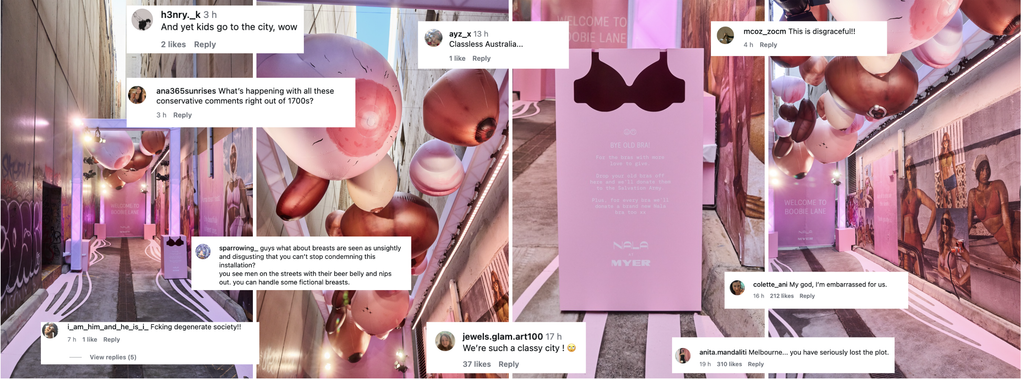
On the other side, Nala is receiving a huge amount of support, with people commenting ‘I love this! Should be permanent’ and ‘Great initiative. Loving the representation of breasts after mastectomy.’ Nala have given a fun and entertaining response, posting a reel on their Instagram with staff reading out their favourite negative comments – a new approach that brands are using to deal with hate online.
Whilst it’s a bit of a laugh to read, to have received such backlash, when Nala’s Boobie Lane is simply a representation of real-life breasts, with no sexualisation, no perfected edited images, and no hiding, is actually pretty sad. Most women are self-conscious and embarrassed by their breasts, and it’s an insecurity that begins young and doesn’t seem to get any easier with age; they’re too small, too big, too saggy, the list goes on. I don’t think I know a single woman who hasn’t criticised and hated their own breasts – to be honest, most of the time we are pretty good at finding flaws in ourselves.
In the 2024 BodyKind Youth Survey from Butterfly, out of the 1275 young girls (aged 12-18) surveyed, 94.1% stated that they had concerns with body image, and 42.9% said they never or rarely feel good about their body. It’s honestly a heartbreaking report to read, but I’m sure most women would be able to understand and relate to it – I know I can. From probably the age of 7 or 8, I have struggled so much with the way my body looks and now, at 25, I still struggle almost every day. That’s why the response on Nala’s Instagram that it is dangerous for children to see something like Boobie Lane, and that it is ‘classless’ and ‘yuck’, is disappointing – it’s more harmful for young girls to grow up seeing a world where women are sexualised, edited, and only look one certain way.
Boobie Lane is an example of how we can help women feel comfortable in their bodies and let go of beliefs that they should feel embarrassed or ashamed by looking ‘different’ – when in reality most breasts and bodies are different. Representation in this space clearly still has a long way to go, and the negative feedback Nala received from Boobie Lane just emphasises that.
The way a lot of us have grown up — having been exposed to fairly confined societal expectations and norms around women’s bodies within the media — can help explain why people are conditioned to respond to something like Boobie Lane with shock, disgust, and negativity. It is a common societal norm, and consequent expectation, that women’s bodies are portrayed in some sort of sexualised and fetishised way, and meant to be hidden until deemed appropriate by society to be on show, and Boobie Lane does the exact opposite. It helps us to see women’s bodies just as they are. “Boobie Lane was a really fun way to bring that idea to life. It’s a visual representation of just how weird and wonderful breasts can be, a celebration of different shapes, sizes, ages, bodies and stories” says Chloe.
In short, Melbourne hasn’t really lost the plot, and Nala’s Boobie Lane isn’t some disgraceful classless act. It’s just different to what people are used to – and that’s a really good thing.
Read more of our Thought-Provoking articles here.