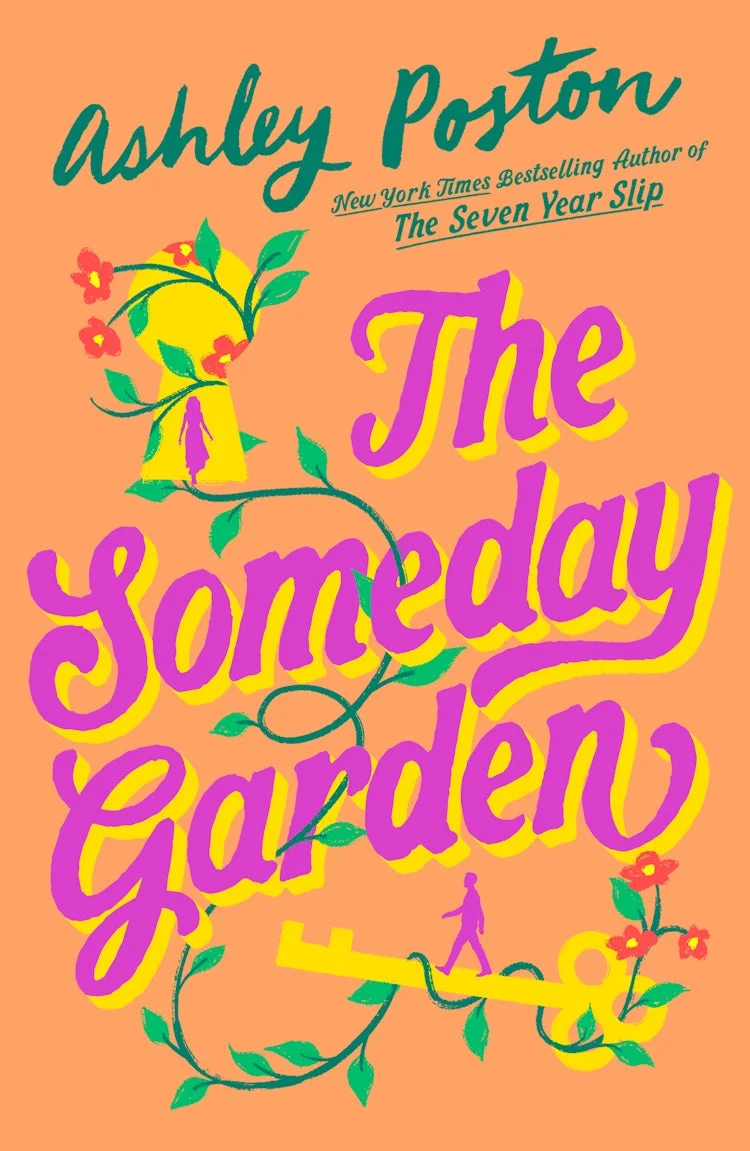
Some stories stay with you long after you’ve turned the final page. The Someday Garden by Ashley Poston is one of them. Blending magical realism with an emotionally rich exploration of grief, hope and healing, the novel invites readers into a world where nature mirrors our deepest emotions and reminds us that growth rarely happens all at once.
At its heart, The Someday Garden is a story about learning to live alongside loss rather than trying to outrun it. Through beautifully crafted characters, an enchanting magical garden and Poston’s signature lyrical prose, the novel offers a thoughtful reflection on love, second chances and the resilience it takes to begin again.
We sat down with Ashley Poston to discuss the inspiration behind the ever-changing garden, why magical realism has become such a powerful way to explore human emotion, and the personal memories woven throughout the novel. Her insights reveal that many of the story’s most moving moments were inspired by her own experiences, adding another layer of meaning to an already unforgettable read.
The Someday Garden Review
Ashley Poston’s The Someday Garden is an emotional and beautifully written novel. It is a story that explores grief, hope, love, and the importance and journey of allowing ourselves to heal. The novel explores the element of magical realism and creates a world where memories and emotions are intertwined with nature, offering a thoughtful reflection on loss without becoming overwhelmingly sad.
One of the novel’s greatest strengths is its character development. Sophie Drear, the protagonist, is portrayed as someone carrying the weight of loss while struggling to imagine a future beyond her grief. Sophie’s emotional journey feels authentic as the story unfolds, her healing is presented as gradual, instead of immediately moving on from her grief. Along the way, she makes mistakes, questions herself, and often feels uncertain, making her journey relatable to the reader. The supporting characters also contribute meaningfully to the story, each bringing different perspectives on love, family, and moving forward in life. Their relationships with Sophie help shape her emotional growth and prevent the novel from becoming solely focused on romance.
The magic garden itself serves as more than simply a magical fantasy setting. It is a symbol of hope, change, and personal growth. As the garden transforms, it begins to reflect the emotional development of the characters, reinforcing the novel’s central message: healing requires patience and care. This symbolism has been effortlessly woven naturally throughout the story, allowing the magical elements to enhance it.
Poston’s writing style is another highlight of the novel. Her descriptions are vivid and atmospheric, creating imagery that makes the gardens, flowers, and changing seasons feel almost alive, and writes as if the garden is a character in its own right. The language is elegant without being difficult to understand, allowing readers to become fully immersed in the setting. The slower pace complements the reflective nature of the story, encouraging readers to appreciate the quieter moments between the characters instead of constantly anticipating dramatic action.
Sophie meets Cyrus, a man trapped in the garden. Sophie feelings for Cyrus develop gradually, rather than relying on instant attraction or unnecessary conflict, the relationship grows through shared vulnerability, trust, and understanding. This makes their romantic storyline satisfying and healthy, it supports the characters’ individual growth instead of becoming the sole focus of the narrative. Ultimately, the novel suggests that healthy relationships can be built through emotional honesty and mutual support.
Overall, The Someday Garden is a beautiful filled with magical realism and an exploration of grief, healing, and hope, and is able to successfully blend all of these areas seamlessly. Its strongest qualities lie in its emotionally rich characters, beautiful written imagery, and meaningful symbolism. While the slower pace may not appeal to everyone, the novel offers a rewarding reading experience for those who appreciate thoughtful, character-driven stories. It is a gentle reminder that although loss changes us, hope can still flourish, much like a garden that continues to bloom after winter.
What Makes The Someday Garden So Special?
Ashley Poston’s novel explores grief, hope and healing through magical realism, but many of its most memorable moments become even richer once you understand how the story came to life. We spoke with Ashley about the magical garden, Sophie, writing grief and the personal memories hidden throughout the novel.
An Interview With Ashley Poston
The Garden as a Character
The secret garden feels like a character in its own right. When did the idea of a magical, ever-moving garden first come to you, and what did you want it to symbolise?
At first, I wanted to write about a magical statue… but the longer I sat in this garden in my head, the more I began to wonder if it’s the garden that was magical. So I scrapped the original idea, and all of a sudden the story that I’d been having trouble with came to life. It’s so fun how writing works that way sometimes! You just have to find the right key into the story.
The garden only reveals itself when it’s ready. Was this inspired by the idea that healing happens in its own time?
Yes! It also mirrors the idea that we can’t control when something new appears in our lives—we can either ignore it and stay on the path, or be curious. And in that curiosity, we grow.
Nature plays such an important role throughout the novel. Did you research gardening extensively, or do you already have a personal love of plants and gardens?
Both! I did quite a few informational interviews with florists and horticulturists that specialize in Maine’s climate, since my own gardening expertise is very narrow. Also, I kill every plant that I touch, but my father has a green thumb, and so did his mother—my grandmother. She had this beautiful backyard garden that I used to play in as a kid. I would pretend the azalea bushes were hedge mazes, that the birchwood trees were beanstalks, that the pond had mermaids living just beneath the surface. A few years ago, my grandmother died and we had to sell her house. The house’s new owners don’t keep up with the garden, and installed a pool instead. So, the garden of my childhood is a place I can’t visit anymore—or so I thought. I didn’t realize it, but after finishing The Someday Garden, I had written my grandmother’s garden into it. I had given myself a gift without even knowing.
Writing Grief, Healing and Hope
Sophie’s journey is deeply connected to healing and growth. Did you always know what emotional journey you wanted her to take, or did it evolve as you wrote?
I did! I knew I wanted Sophie’s journey to be one of loss and healing, of finding your way in a world you might not still want to be in. Once I figured out that it was the garden that was magical, the entire theme of The Someday Garden just fell into place. Gardens change with the seasons, much like how Sophie is grappling with the changes in her own life, and so finding that parallel felt absolutely exhilarating.
Many of your novels blend magical realism with very real emotions like grief, hope, and second chances. Why do you think magic is such an effective way to tell deeply human stories?
We all experience grief and loss, hope and love—we’re human, after all. And sometimes it’s too difficult to face those emotions head-on. With a little magic, these themes and emotions aren’t easier to parse, per se, but magic gives you a safe distance in which to experience those emotions.
If readers could take away just one message from The Someday Garden, what would you hope it would be?
That we should never feel stuck where we have planted ourselves, and we should give ourselves grace and humility when we do. After all, if gardens can change across seasons and still be beautiful—why can’t we?
Love, Friendship and Second Chances
Lilymoor House is filled with quirky, unforgettable characters. Which side character surprised you the most while writing, and why?
Wykofski surprised me the most, strangely enough! At first he was simply the handyman around Lilymoor, but the more I—and Sophie—got to know him, the livelier he became.
The relationships in The Someday Garden don’t follow a traditional timeline. What drew you to exploring love and connection in such an unconventional way?
Without spoiling too much, I love finding new means of connection—both in romantic love and platonic love.
Readers often describe The Someday Garden as feeling both nostalgic and hopeful. What do you hope people are still thinking about long after they finish the last page?
I hope readers think about their best friend. I hope they call them, and I hope they chat for a while.
The Ending
Without giving away spoilers, was there a particular scene in the book that was the hardest for you to write emotionally?
The end was the very hardest to write. I knew what it was since the beginning, but I didn’t know how to go about writing it. Also, I knew I’d cry like a baby and I get headaches when I cry.
Should You Read The Someday Garden?
Overall, The Someday Garden is a beautifully written novel that seamlessly blends magical realism with an emotional exploration of grief, healing and hope. If you’re a fan of magical realism, enjoy the heartfelt romance of Emily Henry, appreciate slow-burn love stories or are simply looking for hopeful, character-driven fiction, this is the next novel you should add to your reading list.
Rating: 4.7/5 stars
Purchase a copy of The Someday Garden by Ashley Poston here.
Read more of our Book Reviews here.