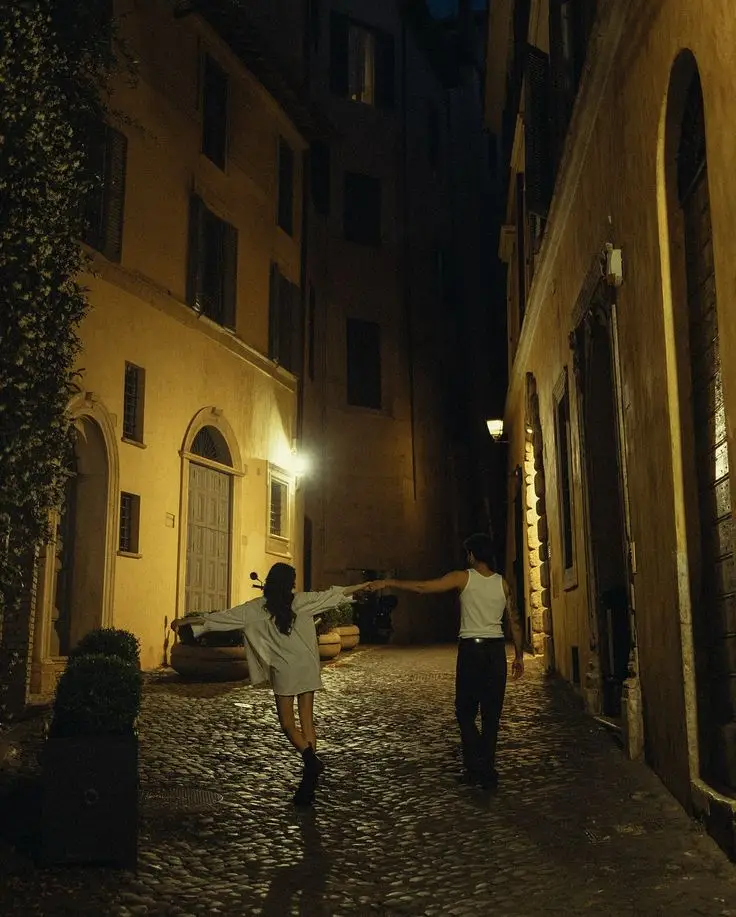
The setting of the sun signifies the ending of the day that has been and welcomes the night to come. On a physical level, darkness triggers the release of melatonin, encouraging our minds and bodies to wind down in sync with our natural circadian rhythm. But perhaps the evening changes more than just our biology. It changes how we experience the world. Somehow, things feel softer and spiritual after dark. Conversations are deeper, we romanticise city lights and even the ordinary moments begin to feel meaningful. So why do evenings carry so much emotional weight?
Perhaps it’s because, for many of us, the evening is the first part of the day that truly belongs to us.
For centuries, many people have believed the moon itself to be intrinsically linked to our spiritual selves, ruling over our deepest emotions and truths. Whether or not we subscribe to those beliefs, there’s no denying that night has long been associated with mystery, romance and possibility. The night has inspired the art we create, the stories we tell and the way we connect with one another. From literature to film, it’s rarely broad daylight when the most meaningful moments unfold and somewhere along the way, we’ve learnt to associate the evening with possibility.
For me there’s something more romantic, more magical and more magnetic about it than its light filled counterpart, and perhaps popular culture has only reinforced that feeling. In movies, it’s always under the dark veil of night that secrets are revealed, lovers confess their feelings and transformations occur.
Why Do We Romanticise the Evening?
We have always risen with the sun, but as humans developed, capitalism and 9-5 working culture developed too. With the social and cultural norm being to work during the day and contribute to what, for some (me included), can feel like a never ending cycle of responsibility and productivity. Our days are often defined by expectation. We’re answering emails, attending meetings, studying, caregiving or simply trying to keep up with the pace of everyday life.
Within this dominating structure, we often feel pressured to be a version of ourselves that aligns with this. It is easy to subscribe to the notion that our worth is determined by how much we contribute during the day – to people, jobs, and society at large. But when night falls, that obligation doesn’t feel as though it holds as much weight. We finally have permission to decide how we want to spend the hours ahead.
Perhaps that’s why evenings feel so emotionally significant. They’re not simply the hours between work and sleep, they’re the hours we get back.
Why Does Night Make Us Feel More Like Ourselves?
At night, we can exhale and reconnect with our truest senses of self because we do not feel that same pressure to perform as we do during the day. When we lower our masks and relinquish the day, we are tired from being who we feel society wants us to be, and we return to a more authentic state. The time we spend post work is entirely ours and representative of our personal freedoms – however we choose to spend it.
It feels natural for us to romanticise the evening because of how poetic our surroundings look and feel. Day shifting into dusk, then into a star-filled night. In the evening, we have the space to feel more creatively attuned, inspired, sexier, more daring or mysterious. It makes sense that we often plan romantic encounters at night, as inhibitions lower with the fading light of day and a sense of intimacy is formed as we feel more emotionally vulnerable.
For me, I also find the evening is a natural time to connect with my sense of femininity, resonating deeply with the divinely feminine energy of the moon and the stars. Perhaps that’s because the evening gives us permission to slow down enough to actually hear ourselves think. Ancient mythologies have historically depicted the moon as a female deity representing wisdom, connection and intuition. Whether symbolic or spiritual, those ideas continue to resonate because night encourages reflection in a way daylight rarely does.
Why Are We More Creative at Night?
I have always felt more in tune with my creative mind at night, and I believe that is because I am simply allowing myself to be still and to give my thoughts space to breathe, which is necessary when cultivating ideas. Alternatively, an evening can bring about a sense of reinvention. Perhaps that’s why we suddenly get the urge to rearrange our bedroom at 11pm, book a spontaneous holiday, cut a fringe or bleach our eyebrows. Night has a funny way of making reinvention feel possible.
How to Romanticise Your Evening
The next time the sun sets, pause before rushing through the evening. Leave your phone in your bag a little longer. Notice the changing colours of the sky, the glow of the streetlights and the feeling of finally having nowhere you need to be except exactly where you are. Romanticise the evening as we feel so naturally inclined to, and remember that perhaps its magic isn’t found in the darkness itself, but in the freedom that arrives with it.
Read more of our Thought-Provoking articles here.